Put the question in ordinary language
We make the issue specific enough to work with, without forcing it to sound tidy.
Career direction, in office hours
Zunefalix Office Hours is a calm, structured place to sort a professional crossroads, name the next useful move, and leave with language you can use.
A half-formed ambition. A difficult manager conversation. A role that no longer fits. Not a polished story.
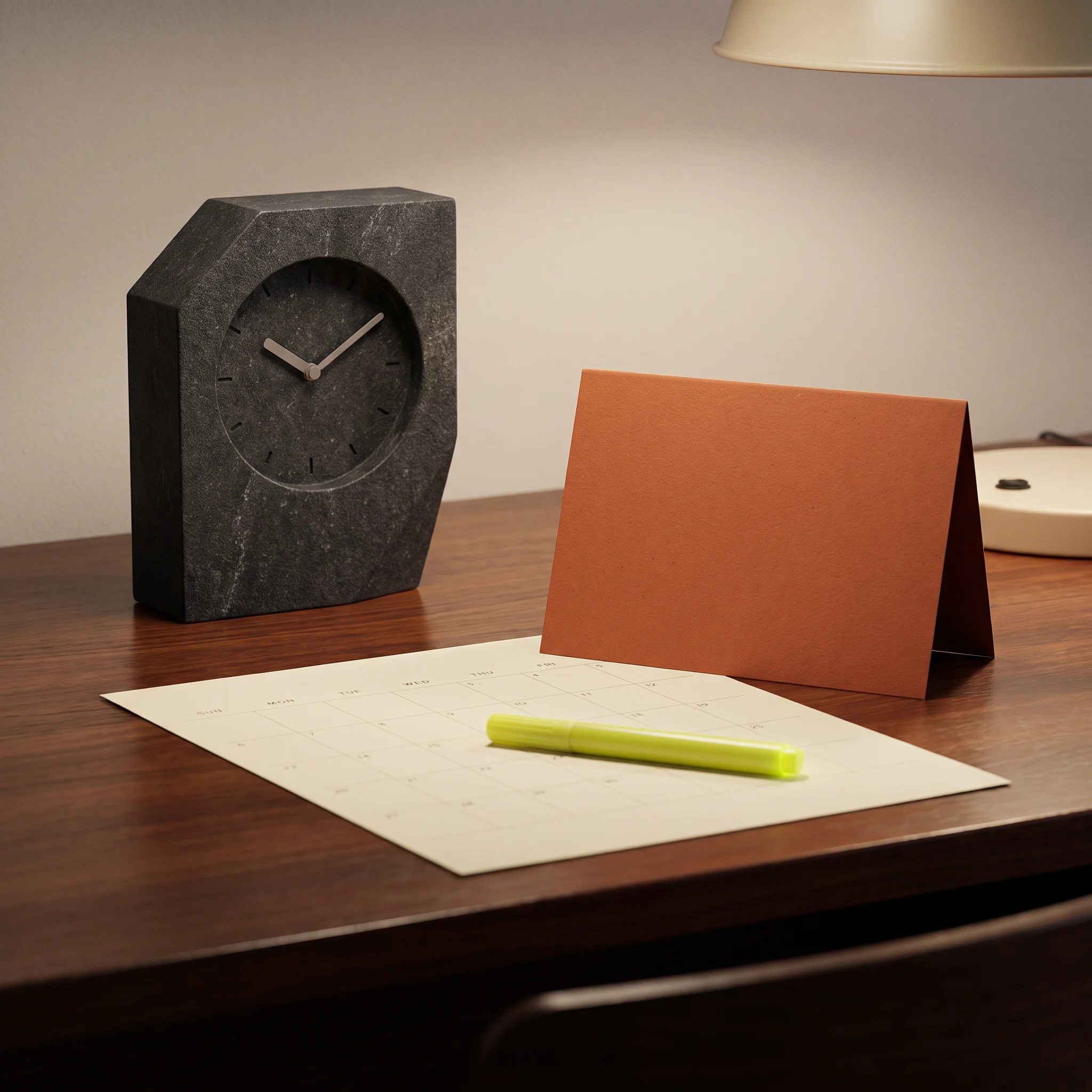
Question Clock
Choose a time to set the table. The clock does not diagnose a career; it simply offers a useful entry point for the conversation.
The opening question
“What am I trying to make easier, truer, or more possible in my working life?”
The appointment sequence
Each appointment is a deliberately small piece of professional direction. You choose where to begin; there is no expectation to arrive with every answer.
We make the issue specific enough to work with, without forcing it to sound tidy.
We look at the responsibilities, relationships and energy patterns that may not appear in a job title.
We test the language you might use with yourself, a mentor, or the person across the table.
We finish by naming one practical move that respects the complexity of the situation.

A paired role reading
A role can be read from two sides at once. Holding both columns in view creates better questions than either one alone.
The formal description, the scope on paper, and the line that appears in a directory or recruitment brief.
The invisible coordination, judgment and trust-building that make the stated work possible each day.
A familiar shorthand for growth, usually carrying several different needs underneath it.
A clearer desire for influence, stretch, steadier conditions, or a different kind of contribution.
 A good question can be collaborative without becoming crowded.
A reflective brief
Office hours are designed to hold the practical and the personal together: the next message, the recurring hesitation, the responsibility you want to be trusted with, the part of your working life that needs a different shape.
The goal is not a perfect plan. It is a more honest working draft.
Office noticeboard
The boundary is simple: this is a space for professional direction and reflection, not a replacement for specialist, therapeutic, legal, financial or hiring advice.


The prompt letterbox
Open a letter when you want something precise enough to carry into a notebook, a conversation, or the end of the day. These are invitations, not instructions.

Which part of your role would you keep doing even if the title changed tomorrow?
Try naming the conditions that make this contribution feel possible. The waiting room is part of the appointment.
A quieter ending
Bring the detail that feels most alive: the meeting you are replaying, the work you want more of, the decision you cannot yet name. We can begin there.
Write a short noteQuestions asked before the appointment
Write a note
This contact form works only in your browser. It is a private way to rehearse a first note and see what you want to say next.
[email protected]